


How to Help Your Lawn Recover After Hot Weather
Simple Steps to Help Your Lawn Recover After Hot and Dry Weather
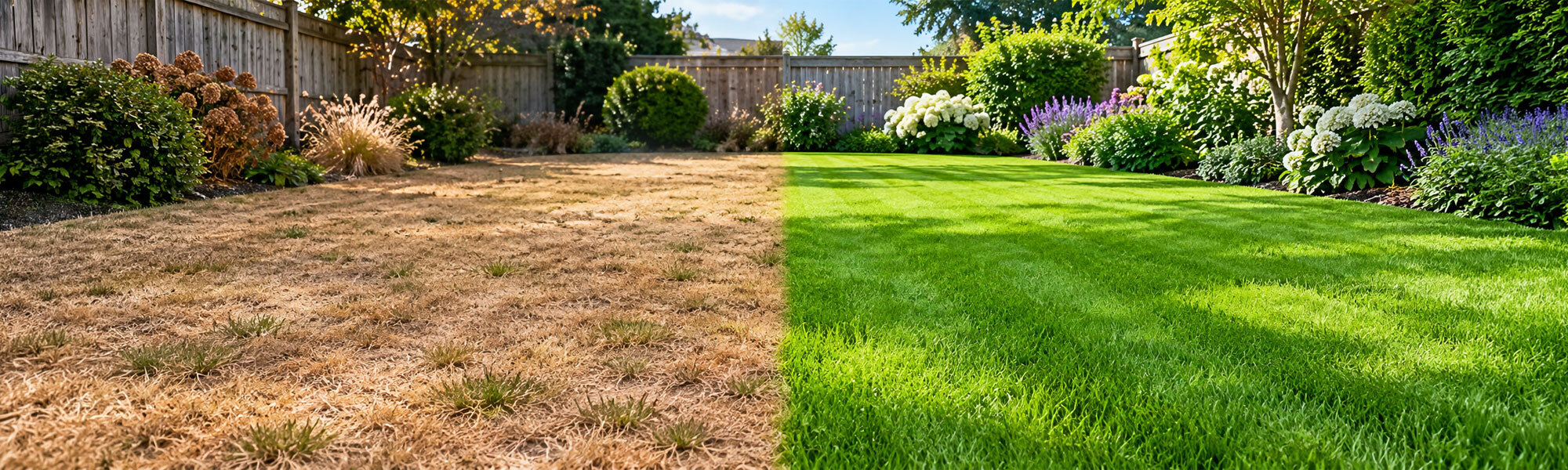
After a spell of hot, dry weather, it’s normal for your lawn to look a little worse for wear. Brown patches, thin grass and dry areas can quickly appear when there hasn’t been much rain, but that doesn’t necessarily mean your lawn is beyond saving.
With a few simple steps, you can give your lawn the boost it needs to start growing healthy and green again.

Before you start raking or reseeding, give your lawn a little time to recover on its own. Grass can be surprisingly resilient, and even areas that look brown and dry may still be alive beneath the surface.
Once temperatures cool and we’ve had some rain, you may notice patches starting to turn green again. Give it a week or two and then take another look to see which areas actually need some extra attention.
If most of the grass comes back, you may only need to overseed a few thin or bare patches. If you’re still left with larger damaged areas or lots of dead grass, it could be worth scarifying, aerating and overseeding to give the whole lawn a helping hand.

-
1. Scarify
Start by removing dead grass, thatch and other loose material with a lawn rake or scarifier. This clears the surface and gives new grass seed a better chance of reaching the soil. -
2. Aerate
Hot, dry weather can leave soil hard and compacted. Use a garden fork or lawn aerator to make holes in problem areas, helping water, air and nutrients reach the grass roots. -
3. Overseed & Water
Spread grass seed over any bare or thin patches and gently rake it into the surface. Keep the soil moist with regular, gentle watering while the new grass starts to establish. -
4. Don’t Mow Too Soon
Give your new grass time to grow before mowing. Once it reaches around 7–8cm tall, give it its first cut, taking no more than the top third off and avoiding cutting it too short.



There are plenty of different grass seed mixes available, and choosing the right one for your garden can make a big difference to how well your lawn grows. Some varieties are better suited to busy family gardens, while others thrive in shady areas or are designed to create a finer, more decorative lawn.
Think about how you use your garden and the conditions your lawn has to deal with before choosing the best seed for the job.
For Busy Family Lawns
Look for a hardwearing grass seed that can cope with plenty of foot traffic and everyday wear and tear. Amenity perennial ryegrass is a great option for busy family lawns, especially if you have children or pets regularly using the garden.
It’s tough, quick to establish and can handle frequent use while still helping to create a healthy, attractive lawn.
For Hot, Dry Garden
Look for drought-tolerant grasses with deeper root systems, as these are better equipped to cope with hot, dry conditions. Their roots can reach moisture further down in the soil, helping the grass stay healthier when the surface starts to dry out.
This makes them a great choice for lawns that get plenty of sun or tend to struggle during long spells without rain.
For Shaded or Ornamental Lawns
Fine-leaved fescues are a great choice if you’re looking to create a finer, neater finish to your lawn. Their fine blades help give the grass a softer, more attractive appearance, while they can also cope well with shady areas and drier conditions.
This makes them a versatile option for gardens with less sunlight or lawns that can struggle during warmer, drier weather.
The Right Tools for the Job
You don’t need loads of tools to get your lawn looking its best again. A lawn rake is great for clearing away dead grass and thatch, while a garden fork can help loosen up compacted soil. Use a soil rake to prepare and level any bare patches before adding fresh seed, then keep everything gently watered with a watering can while the new grass starts to grow.

A bit of regular care can make a big difference to how well your lawn copes with hot and dry weather. Keeping it healthy, avoiding cutting it too short and choosing the right grass seed will all help give it a better chance when temperatures rise.
Whether you’re filling in a couple of bare patches or giving the whole lawn a refresh, you’ll find grass seed, lawn-care tools and everything else you need to get the job done at Charlies.
Lawn Care FAQs
Established lawns usually don’t need watering every day. During long periods of hot, dry weather, giving your lawn a good soak less often can encourage the roots to grow deeper and help the grass cope better with dry conditions.
Yes, autumn is one of the best times to sow grass seed. The soil is still relatively warm, while cooler temperatures and more regular rainfall help keep it moist. Try to sow early enough for the new grass to establish before colder weather arrives.
Early morning is generally the best time to water your lawn. It gives the water time to soak into the soil before the heat of the day, without leaving the grass wet overnight.
Yes, especially if there’s a build-up of moss, thatch or dead grass. Scarifying clears this material away and helps air, water and nutrients reach the soil more easily.
This depends on how quickly your grass is growing. During spring and summer, you may need to mow more regularly, while growth will slow during cooler months. Try not to remove more than a third of the grass height at once.
Autumn is a great time to aerate your lawn, particularly if the soil has become hard and compacted over summer. Making small holes in the ground allows water, air and nutrients to reach the grass roots more easily.
No, it’s usually better to leave your grass a little longer during hot, dry spells. Longer grass helps shade the soil, reduce moisture loss and protect the roots from the heat.
Yes. An autumn lawn feed can help strengthen the grass and prepare it for the colder months ahead. Choose a feed designed specifically for autumn rather than a high-nitrogen summer feed.
Spring and early autumn are usually the best times to sow grass seed, when the soil is warm and there’s more natural moisture available to help the seed germinate.
This depends on the type of grass seed and the conditions, but you’ll often start to see new growth within a couple of weeks. Keeping the soil consistently moist will help give the seed the best start.
Yes. Leaving a thick layer of leaves on your lawn can block out light and trap moisture, which isn’t great for the grass underneath. Rake or collect them regularly to keep your lawn clear and healthy.
Bare patches can be caused by hot weather, heavy foot traffic, pets, compacted soil or general wear and tear. Raking the area, loosening the soil and overseeding can help encourage fresh growth.
Avoid mowing too short, water when needed and keep your lawn healthy throughout the year. A strong lawn with deeper roots will generally be better prepared to cope when hotter, drier weather arrives.