


Water Fountain & Pump Maintenance Guide | Cleaning, Troubleshooting & Care

Keep Your Water Fountain Running Smoothly
Keeping your water fountain clean and your pump running smoothly is crucial for extending the lifespan of your fountain and ensuring your system operates smoothly throughout the season. Whether you have an indoor water feature or an outdoor water fountain, regular maintenance will help prevent blockages, algae build-up and keep repairs to a minimum.
In this guide, we'll walk you through how to maintain your water fountain, how to clean the water fountain pump, and suggest a few tips and tricks to keep your system running efficiently all year long. These tips apply to both mains-powered water fountains and solar-powered water features, helping you get the best performance from your garden or indoor setup.
If you're ever unsure, refer to your fountain's instruction manual for full guidance and tips.
How To Care For Your Water Fountain
Regular water fountain maintenance can help keep your water feature running smoothly and help reduce strain on the fountain's pump. Keeping your fountain clean helps prevent blockages, algae build-up and poor water flow, while also extending the lifespan of your fountain and pump.
Regular Cleaning
To prevent dirt from building up, clean your fountain every 1-2 weeks:
• Empty the fountain completely
• Rinse all surfaces with clean water
• Use a mild soap for a deeper clean
• Remove leaves, debris & residue
Water Management
Maintaining clean water in your fountain helps prevent mineral deposits and limescale build-up, especially in hard water areas:
• Use tap water or rainwater to help prevent scale build-up
• Use distilled water where possible to prevent mineral build-up
• Change the water regularly to prevent stagnation
• Consider using a water fountain- safe cleaning solution
Preventing Algae Build-Up
Algae is one of the most common issues with water fountains, especially if they're outdoors. Algae thrives in warm, stagnant water and direct sunlight, making regular cleaning and positioning essential:
• Position your fountain in partial shade
• Refresh the water regularly to prevent stagnation
• Use a fountain-safe algae treatment

How To Care For Your Water Pump
Your fountain's water pump is the heart of your system, responsible for keeping the water flowing freely and smoothly. Regular water fountain pump maintenance helps prevent breakdowns, improves performance, and extends the lifespan of your fountain.
How To Clean The Pump
Cleaning your fountain's pump should be done monthly or whenever you notice a drop in performance.
• Turn off and unplug the fountain (if mains powered)
• Remove the pump from the fountain, following your manufacturer's advice
• Disassemble the pump and remove the filter
• Clean all parts with clean water or a mild vinegar solution
• Reassemble and reinstall the pump
• Reconnect the power supply (if mains powered) and check that water is flowing correctly
Check for Blockages
Debris such as leaves, dirt and limescale can clog the pump and restrict the water flow.
• Inspect the pump's intake and tubing
• Remove any debris, dirt or scale build-up
• Ensure water can flow freely through the system
If blockages aren't cleared, this can lead to reduced performance or the pump failing.
Maintain Proper Water Levels
Running your fountain without enough water in the system can cause the pump to run dry, leading to overheating and permanent damage.
• Ensure the pump is always fully submerged
• Check the water level regularly
• Top up frequently, especially in warmer weather

Advanced Fountain Pump Care, Safety & Replacement Guide
Proper water fountain pump care goes beyond basic cleaning. Understanding electrical safety, solar panel performance, and the key signs your fountain pump needs replacing will help maintain strong water flow, prevent common issues, and keep your water feature running smoothly all year round.
Electrical Safety (Mains Powered Pumps)
When using a mains-powered water feature, following basic electrical safety guidelines helps protect both your pump and your outdoor setup.
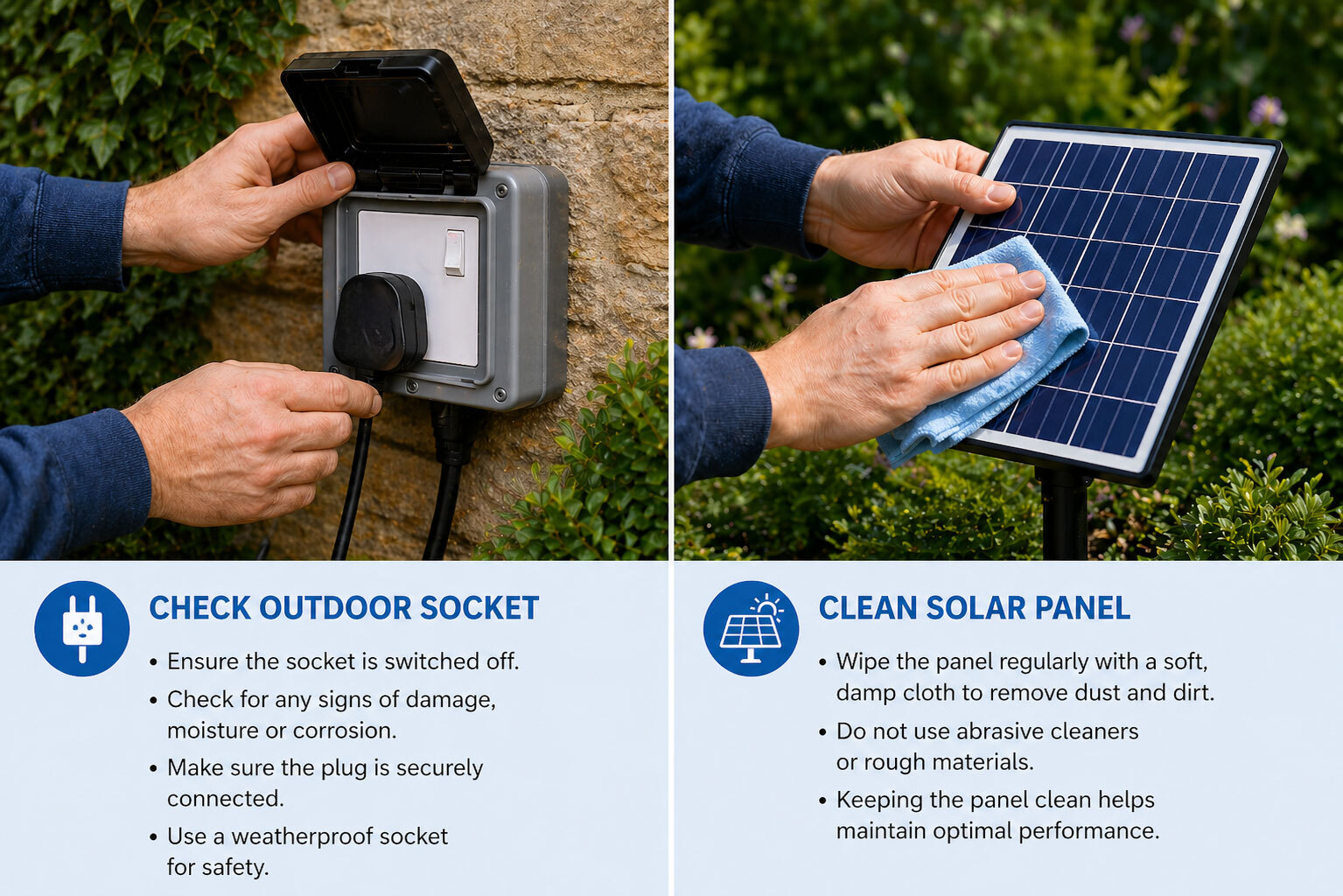
• Only use a weatherproof outdoor socket
• Ensure the socket is protected by an RCD
• Keep all connections dry
• Check cables for wear or damage
• Never operate a damaged pump
Solar Panel Maintenance (Solar Powered Pumps)
If your fountain is solar powered, you'll need to clean the solar panels as well. Dirt or dust on the solar panels can reduce the efficiency of your fountain and cause it to stop working or run intermittently.
• Use a mild window cleaning solution with a tissue or warm, soapy water to clean the panels.
• We advise not to use abrasive or corrosive substances, as this may damage the solar panel and limit the amount of sunlight the panel can capture.
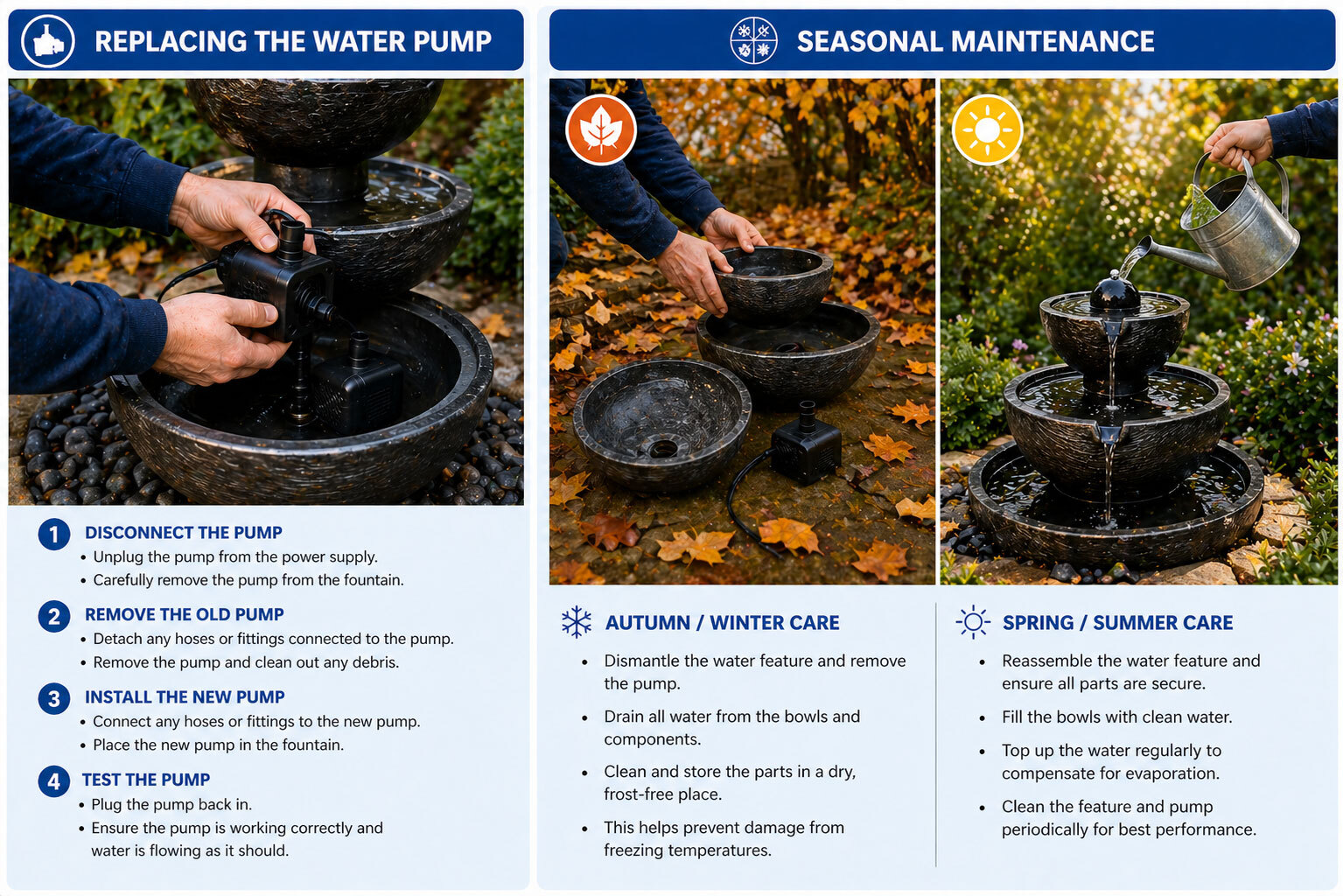
When Should You Replace Your Fountain Pump?
Even with regular maintenance, pumps will eventually wear out.
You may need to replace your pump if:
• Cleaning does not restore water flow
• The pump is making a persistent noise
• The pump stops working completely
• The pump is over 1–3 years old
When replacing a pump, always match the flow rate (L/H) and size to your fountain to ensure compatibility.
Seasonal Maintenance
Different seasons bring different challenges, especially in the UK Climate.
• Winter: Drain the fountain and store it indoors, as freezing temperatures can cause damage to both the fountain and pump
• Summer: Monitor the water level regularly and top-up as needed, especially in long, hot, sunny periods
Common Fountain & Water Pump Problems (And How To Fix Them)
Even with regular maintenance, issues can still arise. Here's how to quickly fix the most common problems and get your water feature back up and running.
Low water flow - Usually caused by low water levels or a blockage. Top up the water and clean the pump and tubing. If the flow doesn’t improve, the pump may need replacing.
Pump not working - Check the power supply or solar panel is positioned correctly. Clean the pump and remove any debris. If it still won’t start, it’s likely time for a replacement.
Noisy pump - This is often due to trapped air, debris, or low water. Make sure the pump is fully submerged and clean inside. Ongoing noise can mean wear and tear.
Cloudy or dirty water - Caused by dirt, algae, or stagnant water. Empty the fountain, clean it thoroughly, and refill it with fresh water.
Solar Fountain turning on and off - This is usually due to inconsistent sunlight. Move the panel into direct sunlight and clean it. Intermittent flow is normal without battery backup.
Water turning green - Algae is the cause. Clean the fountain, change the water regularly, and use an algae treatment. Placing it in partial shade can also help.
Water Fountain & Pump FAQs
Find quick answers to common questions about fountain care, pump maintenance, and troubleshooting common issues.
This is usually caused by low water levels or debris in the pump. Top up the water and clean the impeller housing. If the issue continues, the pump may need to be replaced.
You can use stones and artificial plants, but they should be cleaned regularly to prevent blockages. Real plants and fish are not recommended, as most water features are not designed to support them.
We recommend storing your fountain indoors during winter or when frost is expected. Freezing water can damage both the pump and the fountain.
This is usually caused by the flow rate being too high or the fountain not being level. Adjust the pump flow and ensure the fountain is sitting evenly.
Place the panel in a location with direct sunlight for most of the day. Avoid shaded areas, as this will reduce performance.
Solar fountains will still function in cloudy conditions, although their performance may be reduced. Only models with battery backup will continue running without direct sunlight.